MOH’S SKIN CANCER REPAIR
500,000 cases of skin cancer are reported in the United States along – every year…
Skin cancer is the most common form of cancer today…
Melanoma & Non-Melanoma are the most common types of skin cancer today but are highly curable if treated early. More than 90% of skin cancer is caused by the Sun’s UV rays. Everyone is at risk – some people more than others. Skin cancer can develop anywhere on the body but - about 80% of skin cancers appear on the face, head and neck. If diagnosed early – with early treatment – skin cancer can be treated successfully. It can be disfiguring or fatal if left untreated. The primary cause of skin cancer is ultraviolet radiation most often from the sun - along with sunlamps and tanning booths.
Anyone of any age, race or skin type can get skin cancer – but the following shows those with the greatest risk factors:
RISK FACTORS for SKIN CANCER:
- People with lighter - natural skin color
- People with a Family/Personal history of skin cancer
- Over - Exposure to the sun through work and play
- Those with a history of sunburns early in life
- Skin that burns, freckles, reddens easily, or becomes painful in the sun
- Blue or green eyes & Blond or red haired people
- Certain types & a large number of moles
- Some prescription drugs make you more susceptible to UV rays
TYPES OF SKIN CANCER
- Basal Cell Carcinoma – is the most common type of skin and is the least dangerous type. It tends to grow slowly, rarely spreads beyond its original site, is seldom life-threatening but if left untreated it can grow deep beneath the skin and into the underlying tissue and bone causing serious damage – especially if located near the eye.
- Squamous Cell Carcinoma – is the second in line and frequently appears on the lips, face or ears. It sometimes spreads to distant sites including lymph nodes and internal organs. Squamous Cell carcinoma can become life threatening if left untreated.
- Malignant Melanoma – is the least common type - but occurrence is on the rise – especially in Sunbelt states. It is the most dangerous type of skin cancer but can be completely cured if diagnosed early and treated quickly. Malignant melanoma is capable of spreading throughout the body and can be fatal if not found and treated early.
SYMPTOMS OF SKIN CANCER:
- A small lump (spot or mole) that is shin, waxy, pale in color & smooth in texture
- A red – firm lump – either a spot or mole
- A sore or spot that bleeds or becomes crusty – sores that don’t heal
- Rough/scaly skin patches – Flat scaly areas that are red or brown
- New growths that are suspicious
DIAGNOSIS FOR SKIN CANCER:
Diagnosis involves removing all or part of the skin cancer growth and examining those cells microscopically.
TREATMENTS & MOH’S SURGERY
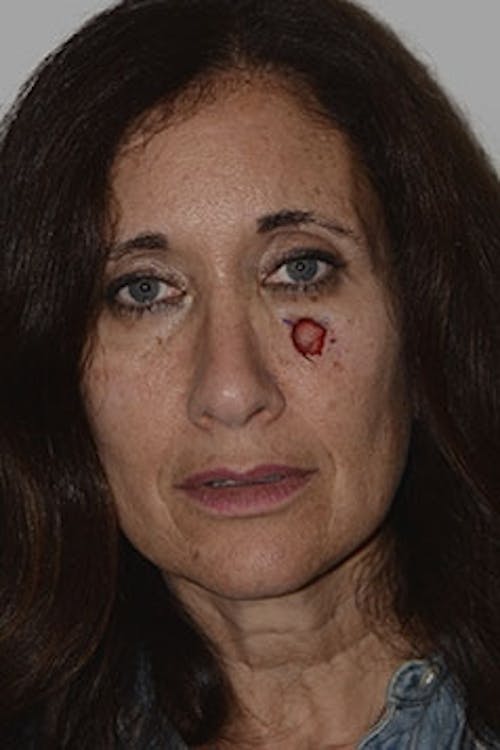
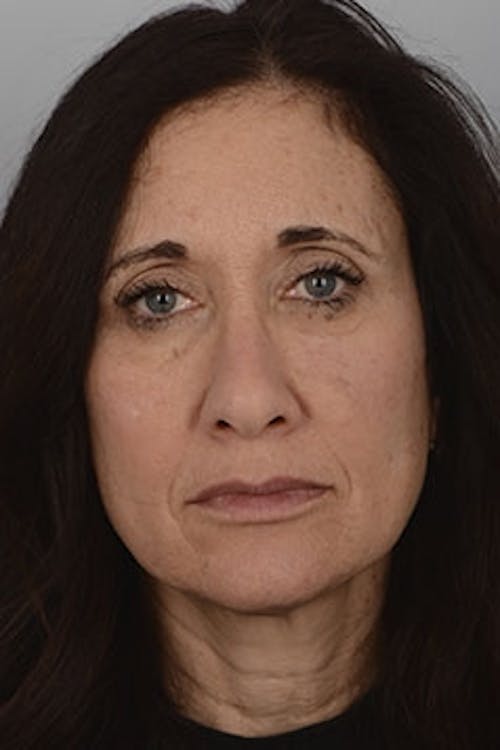
Several treatments are used - depending upon the type of cancer, the growth stage - the location on your body. Most cancers are surgically removed under local anesthesia. Other treatments include curettage, cryosurgery, radiation therapy, topical chemotherapy and Moh’s surgery which is performed only by specially trained surgeons. In cases of major surgery, even though they are life-saving, they often leave patients with less than pleasing cosmetic or functional results. Dr. White is a Moh’s specialist and specially trained reconstructive surgeon. He performs Moh’s Reconstruction surgery regularly.
MOH’S RECONSTRUCTION:
Reconstruction surgery is performed for 3 reasons: to repair damaged tissue – to rebuild body parts – to restore function and a more pleasing appearance. Mohs is a technique, used to remove skin cancers, and it ensures complete removal by examining all the margins of the removed tissue microscopically. Mohs is also referred to as Mohs excision, Mohs removal or simply Mohs surgery. The Mohs procedure employs two critical components: Mohs removal of the skin cancer and Mohs Reconstruction of the defect. The majority of Mohs defects are on the face – many on the nose and lip areas where skillful, artistic reconstructive surgery is required to avoid a significant cosmetic deformity. Reconstruction of the nose is one of the most challenging, complex aspects of plastic surgery because of its structure, size, shape and function. The forehead, cheeks and lips present their own unique challenges. Dr. White specializes in Mohs cancer repair and reconstruction surgery.
_____________________________________________
Choosing A Facial Plastic Surgeon:
Choosing a surgeon is serious business and should require certain factors in order for you to trust and place your confidence in this surgeon; is he qualified to perform the procedure you need/want safely and effectively, does he have excellent training, a proven track record, and is he specialized in the areas of concern? Dr. White is in a special league of surgeons who have been trained in Ivy league schools and who have many extra years of training and experience through “fellowships” – which involve extra years of rigorous training/experience. He is specialized in procedures of the head and neck – and he teaches other surgeons – the life-changing techniques that he uses for his own patients.
Dr. Matthew White is a cosmetic & reconstructive facial plastic surgeon –you can trust him to use safe, effective, proven – minimally invasive techniques – to achieve the outcomes you want & deserve. |